Key points
- DVLA's current guidance lists a high-top roof or pop-top elevating roof as one of the external features it expects to see on a converted motor caravan.
- Being on that list means the vehicle can be considered. DVLA still decides each application and can leave the body type unchanged.
- DVLA states that body type should not affect the insurance category of a vehicle. It also does not record or set resale values.
- You can use a converted van as a campervan without changing the body type on the V5C at all.
If you are fitting a pop-top to a panel van, or buying a van that already has one, the question of the V5C comes up quickly. Older articles and forum threads often say a pop-top does not count with the DVLA. Under the guidance currently published on GOV.UK, that is no longer true: an elevating roof is named in the list of external permanent features DVLA expects to see on a motor caravan conversion.
What follows is a plain-English walk through that guidance, so you can see exactly what is and is not being said. The guidance itself is linked at the foot of this page, and we would always encourage you to read the current version rather than rely on any summary, including ours.
What DVLA lists as external features
The guidance describes external features that are commonly seen on motor caravans, and says the list sets out what DVLA expects to see when it considers an application. There are three items:
- Two or more windows on at least one side of the main body, not counting windows in the driver or passenger doors, providing a reasonable amount of daylight into the living accommodation.
- A separate door providing access to the living accommodation, again excluding the driver and passenger doors. A window in this door counts as a separate window on the main body.
- A high-top roof or pop-top elevating roof.
The third item is the one that matters for most conversions we see. Note the wording: high-top or pop-top. A fixed high top is not required, and a pop-top is not excluded. It is named as an option in its own right.
Earlier versions of the same page referred only to a high top and specifically excluded a pop-top elevating roof. That wording has gone. If you are working from an old forum post, an old PDF, or a blog article written before the change, the advice may well be out of date.
Why a feature list is not a promise
The most common misunderstanding is treating the feature list as a checklist that automatically produces a V5C change. The guidance is careful about this, and the decision sits with DVLA:
“DVLA will consider all the information provided. They will then either decide that the body type must stay the same, or allocate an appropriate description based on the changes made to make sure the recorded body type accurately reflects the vehicle's external appearance in traffic.”
Three practical points follow from that. First, an application can be refused even when the features are present, and the body type can simply stay as it is. Second, some vehicles will not be changed at all: the guidance notes that certain base vehicles have an original frame or outer structure so distinctive that the body type cannot move away from the manufactured design, with a bus given as the example. Third, DVLA may want to inspect the vehicle. DVLA covers the cost of the inspection, but not the cost of getting the vehicle there, and if the vehicle cannot be inspected the application is refused.
So we will not tell you that fitting a roof will get your van reclassified, because nobody outside DVLA can promise that. What we can tell you is that an elevating roof is one of the external features DVLA lists, and that a complete, safely built conversion with the internal features and photographic evidence is the strongest position to apply from.
What about insurance?
This is worth quoting in full, because it is often repeated incorrectly. The guidance says the body type is an appearance and identification record:
“The DVLA body type is used for establishing vehicle appearance and identification and should not affect the insurance category of the vehicle nor have any effect on speed limits or legislative requirements.”
In other words, a body type change is not a way to move your van into a different insurance category, and we would not describe it as one. That is a separate question from your duty to tell your insurer about the conversion itself: a roof, side windows, extra seats, gas, electrics and a changed interior are modifications, and what your insurer wants to know about them is set out in your policy. Premiums and categories remain a commercial decision for your insurer, not something DVLA records and not something a garage can predict.
And resale value?
DVLA records vehicle details for road safety and law enforcement. It does not record values, and there is nothing in the guidance about a body type change affecting what a van is worth. We do not claim that a pop-top, a conversion or a V5C change adds a set amount to resale value.
What we would say is more modest and more useful: buyers tend to ask how the roof was fitted, who did the work, whether the electrics and gas were done properly, and whether there is paperwork. A conversion with photographs and receipts behind it is easier to have a straight conversation about when you come to sell. What an individual buyer will pay is their decision.
You can still use it as a campervan without changing the V5C
This is the part that surprises people most. The guidance is explicit that a body type change is not required in order to use a converted van as a campervan:
“Even if the vehicle's body type is not changed to 'motor caravan', the vehicle can still be used for this purpose as long as the keeper is satisfied the converted vehicle meets the required internal features for motor caravans.”
The internal features DVLA refers to are seats and a table, sleeping accommodation (which may be converted from the seats), cooking facilities, and storage facilities. They must be rigidly fixed to the living compartment, although the table may be designed to be easily removable. The full definition is published separately and is linked below.
If your van is used as a camper and the V5C still says panel van, that is not automatically a problem. It is worth understanding what your insurer and your finance agreement, if you have one, expect to be told about the conversion.
If you do decide to apply
The mechanics of an application are straightforward, even though the outcome is not guaranteed. DVLA asks for:
- A completed motor caravan conversion checklist (form V1006).
- Interior photographs of each required feature, with the bed and table in the use position, showing two or more windows providing daylight into the main living accommodation on at least one side.
- Exterior photographs from the front, both sides and the rear, with the registration plates clearly visible.
- A photograph of the vehicle identification number or chassis number stamped on the plate attached to the original chassis or bodyshell.
- A description of what each photograph shows, the date and the registration number written on the back of each one.
- The V5C with section 1 completed if it is a new style document, or section 7 if it is the older style, sent to DVLA, Swansea, SA99 1BA.
Photographs are not returned automatically, so ask if you want them back. If an application is rejected, there is a separate route to ask DVLA to review the decision, which is also linked below.
Weight, seats and safety
Two safety points in the guidance are easy to skip past and worth repeating. Conversion equipment adds weight, which raises the unladen weight and reduces payload; the converted vehicle should still have enough payload for the number of passengers it has seats for, plus luggage and full water tanks. And any seats or seat belts fitted for use while travelling must be securely mounted.
It is also the keeper's responsibility to make sure alterations do not compromise safety, and to be able to show that the conversion was completed safely if the vehicle is sold later. That is one reason we photograph our roof installations and keep the paperwork.
What we do at AVS Bransgore, and what we do not
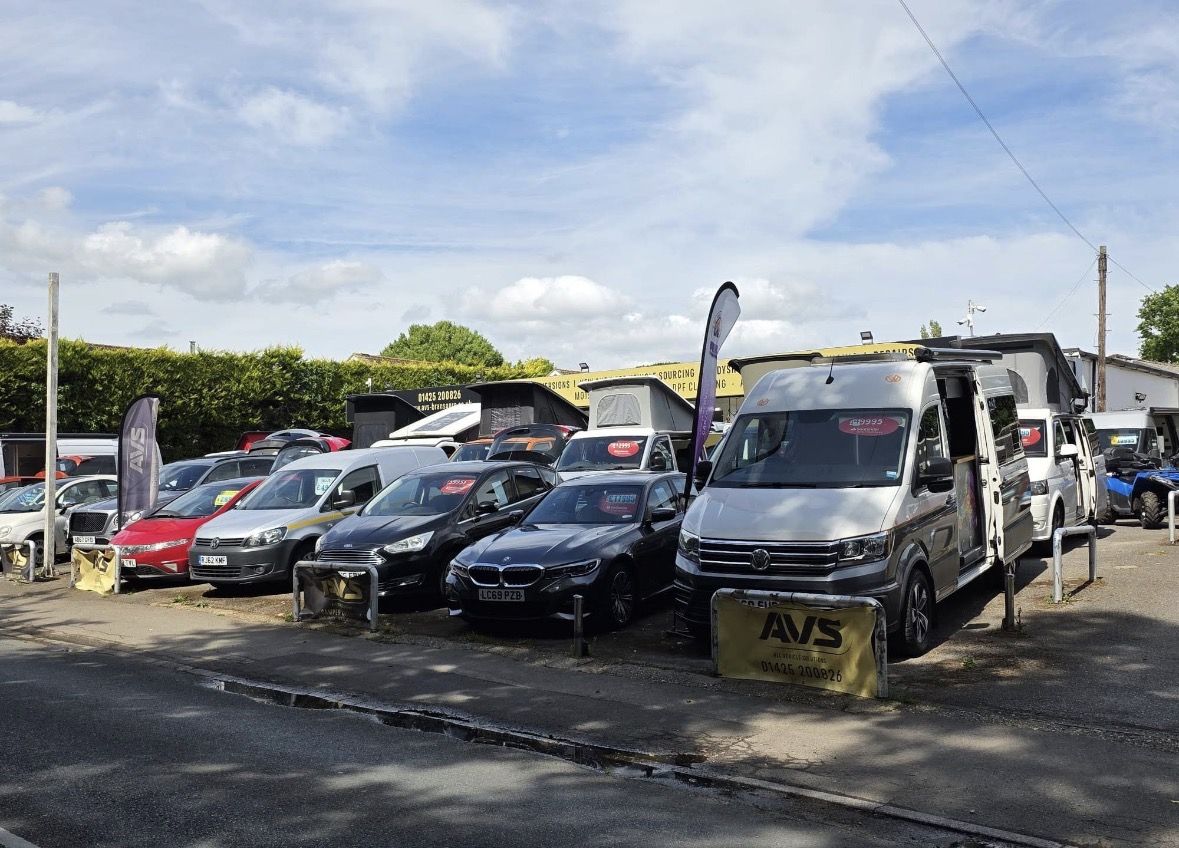
We fit pop-top and high-top roofs and carry out campervan conversions at our Bransgore workshop. We can photograph the installation, keep a record of what was fitted, and talk you through the features DVLA lists so you know what an application would need to show.
We do not submit body type applications on your behalf, we do not act as an intermediary with DVLA, and we will not tell you that a particular outcome is certain. If you need the van weighed, or want a second opinion on whether a conversion is built to a standard you would be comfortable selling on, that is the kind of thing we can help with. Ring the workshop on 01425 200826 if you would like to talk it through.
Common questions
- Does a pop-top roof make my van a motor caravan for DVLA?
- No. DVLA lists an elevating roof as one of the external features it expects to see on a converted motor caravan, but the body type is decided from the whole vehicle against its published list. Fitting a roof on its own does not change the V5C.
- Will DVLA change my V5C body type automatically after a conversion?
- No. You apply to DVLA with photographs and supporting documents, and DVLA decides whether the conversion meets its definition. We can prepare the vehicle and the paperwork, but we cannot promise an outcome.
- Does a pop-top conversion change my insurance category or resale value?
- That is a matter for your insurer and the market rather than DVLA. Tell your insurer about the conversion before you drive, and ask them how they will treat it. We do not claim that a roof changes an insurance category or adds resale value.
Sources and further reading
Checked 6 November 2026. Guidance can change — open the source before you rely on it.
- Converting a vehicle into a motor caravan (motor home)
DVLA guidance, updated 2 November 2026. The source for the external features, internal features, evidence requirements and the statement about insurance categories.
- V1006 motor caravan conversion checklist
The checklist DVLA asks you to complete and send with your V5C.
- Registering a DIY caravan: required internal features
The full definition of the internal features a motor caravan must have.
- Ask DVLA to review a rejected motorhome body type application
What to do if an application has already been refused.
Found this useful?
Send it to someone who is about to ask the same question.