
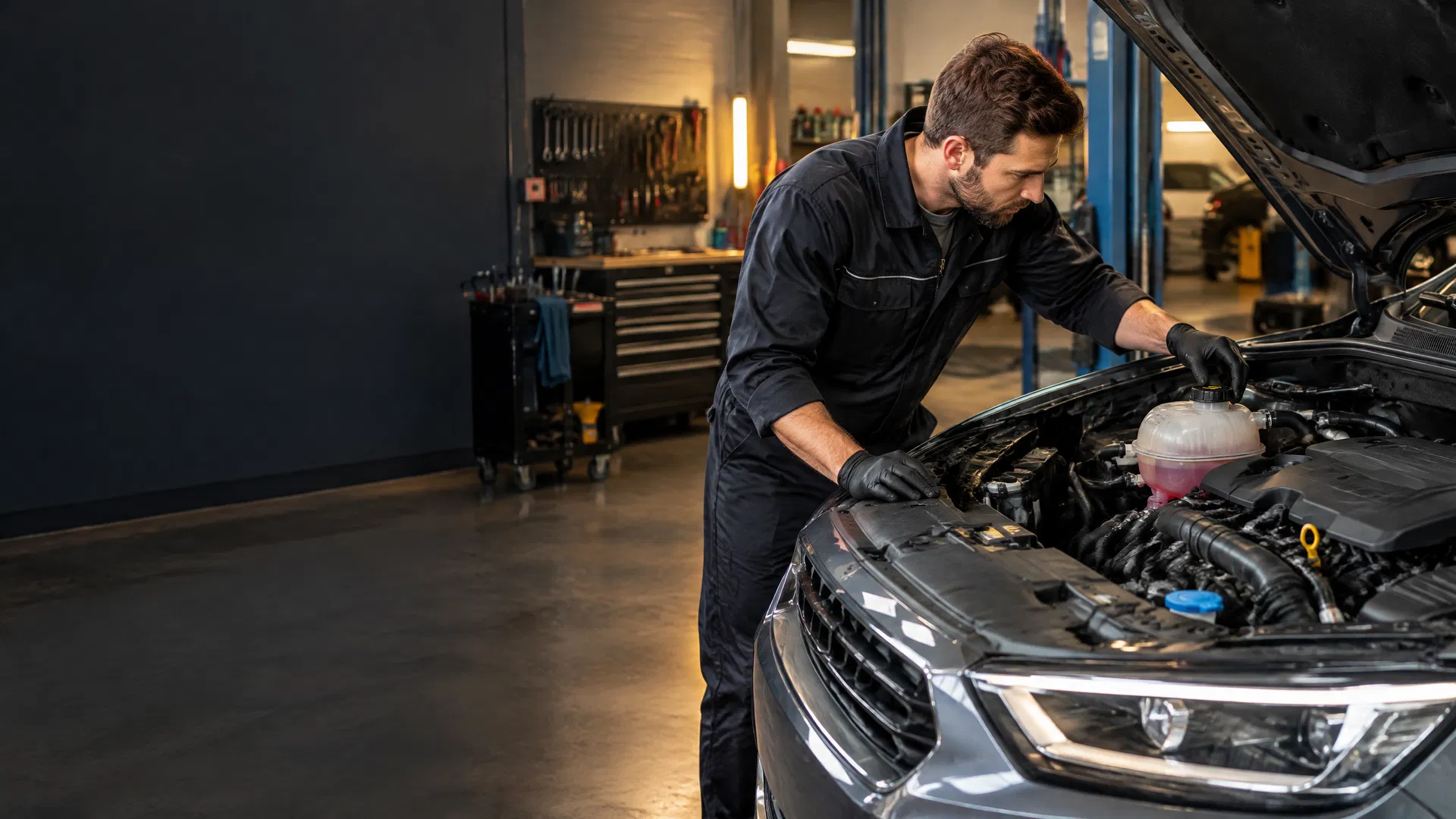
The cooling system keeps the engine within a safe operating temperature. It uses coolant, a water pump, a thermostat, a radiator, hoses and a cooling fan to move heat away from the engine. When one part starts to fail, the first clue may be a warning message, a rising temperature gauge or a small patch of liquid under the car.
Overheating should never be treated as a minor inconvenience. Continuing to drive with too little coolant or a cooling-system fault can turn a relatively manageable repair into serious engine damage.
Warning Signs of Overheating
A temperature gauge moving above its normal position is the most obvious sign. Some modern cars use a warning light or message instead of a traditional gauge. Steam from under the bonnet, a sweet smell, a loss of cabin heating or coolant visible around the engine are also reasons to stop and investigate safely.
A cooling fan that runs loudly after the engine is switched off can be normal in some circumstances, but it can also indicate that the engine has been hot or that a sensor and fan-control problem needs checking. Repeatedly topping up coolant is not a repair; it means the cause of the loss still needs to be found.
Common Causes
External leaks can come from a hose, radiator, water-pump seal, thermostat housing or expansion tank. A failed water pump may reduce circulation, while a thermostat that sticks closed can prevent coolant reaching the radiator. A damaged fan or fan-control circuit can make overheating more likely in traffic when natural airflow is low.
Coolant can also be lost internally. White exhaust smoke, a contaminated oil filler cap, bubbling in the expansion tank or a persistent pressure problem may require further investigation. These signs are not proof of one specific fault, so proper testing matters before parts are replaced.
What to Do If the Temperature Rises
Turn off the air conditioning, switch on the heater only if it helps you reach a safe place, and stop as soon as it is safe. Switch off the engine and allow it to cool. Never remove a coolant cap while the system is hot, because pressurised coolant can cause severe burns. Do not pour cold water over a hot engine.
Once the engine is cold, you can look for obvious leaks, but do not continue a journey simply because the warning has disappeared. Arrange recovery or professional advice if the temperature rose significantly, coolant is missing or the engine is misfiring.
Keep the Cooling System Healthy
Use the correct coolant specification and dilution for the vehicle. Check the level according to the handbook, look for staining around hose connections and pay attention to changes in cabin heat or engine temperature. Coolant also has a service life, so it should be replaced when the manufacturer specifies rather than treated as a permanent fluid.
AVS Bransgore investigates coolant leaks, overheating and cooling-system warnings on all makes and models, including VW vehicles. If your temperature gauge is rising or you are regularly topping up coolant, call 01425 200826 before a small leak becomes an engine repair.
Found this helpful?
Share it with a friend who might find it useful.