
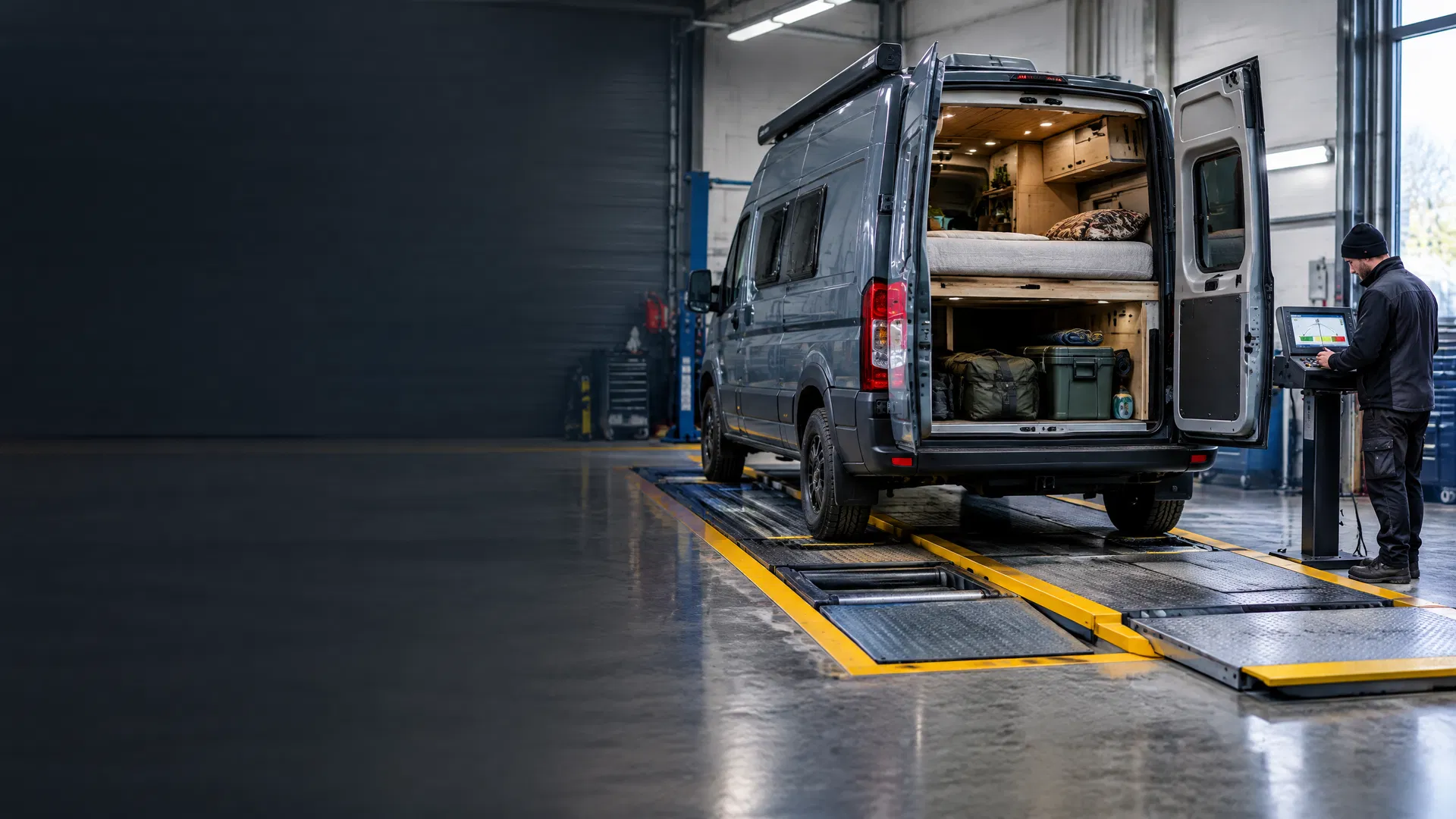
A campervan conversion changes how a van is used and how much it weighs. Furniture, batteries, water tanks, gas equipment, awnings, bikes and camping supplies all add up. Payload is the weight the vehicle can carry once the base vehicle is accounted for, and it must cover passengers as well as equipment.
Planning the layout around weight is not just an administrative exercise. Excess weight can affect braking, handling, tyres, suspension and stability. It can also make a vehicle illegal to use if its permitted limits are exceeded.
Understand the Numbers
The maximum authorised mass, often shown on the vehicle documents or information plate, is the maximum permitted loaded weight. The unladen or kerb weight is not always calculated in exactly the same way, so use the manufacturer's information and allow for fluids, fuel, passengers and conversion equipment.
Axle limits matter as well as the overall figure. A heavy water tank, battery bank or storage box positioned at one end can load one axle disproportionately. A vehicle can be below its total limit and still exceed an axle limit, which is why professional weighing can be valuable after a conversion.
What Counts as Payload?
Payload includes every item added after the base vehicle specification. That means fixed cupboards, beds, kitchen units, gas lockers, solar equipment, leisure batteries, water, food, clothing, tools, bikes and people. A full fresh-water tank can add a significant amount, and the same is true of sports equipment or an awning stored outside the main cupboards.
Do not rely on an online conversion estimate alone. Two vans with similar layouts can have different weights because of materials, windows, heating, electrical systems and reinforcement. Weigh the finished van in the way you actually travel, including normal passengers and trip equipment.
Distribute Weight Sensibly
Keep heavy items low and close to the centre of the vehicle where practical. Avoid placing too much weight high up, far behind the rear axle or on one side. Store loose items so they cannot move during braking, and check that storage doors and latches are suitable for the loads behind them.
Water and gas should be secured in systems designed for the vehicle. Batteries need proper mounting and ventilation as appropriate, while heavy recovery equipment should not simply be left on the floor. A tidy installation is easier to inspect and makes the vehicle more predictable to drive.
Check Before a Long Trip
Review tyre pressures against the loaded-vehicle recommendations, check that suspension is not visibly sagging and pay attention to changes in braking or steering. If you add a tow bar, bike rack, extra battery or large tank, reassess the weight rather than assuming the original figures still apply.
New Forest Custom Campers plans conversions with payload, storage and day-to-day use in mind. If you are considering a campervan build or want to check an existing layout, call AVS Bransgore on 01425 200826 for practical advice before adding more equipment.
Found this helpful?
Share it with a friend who might find it useful.