
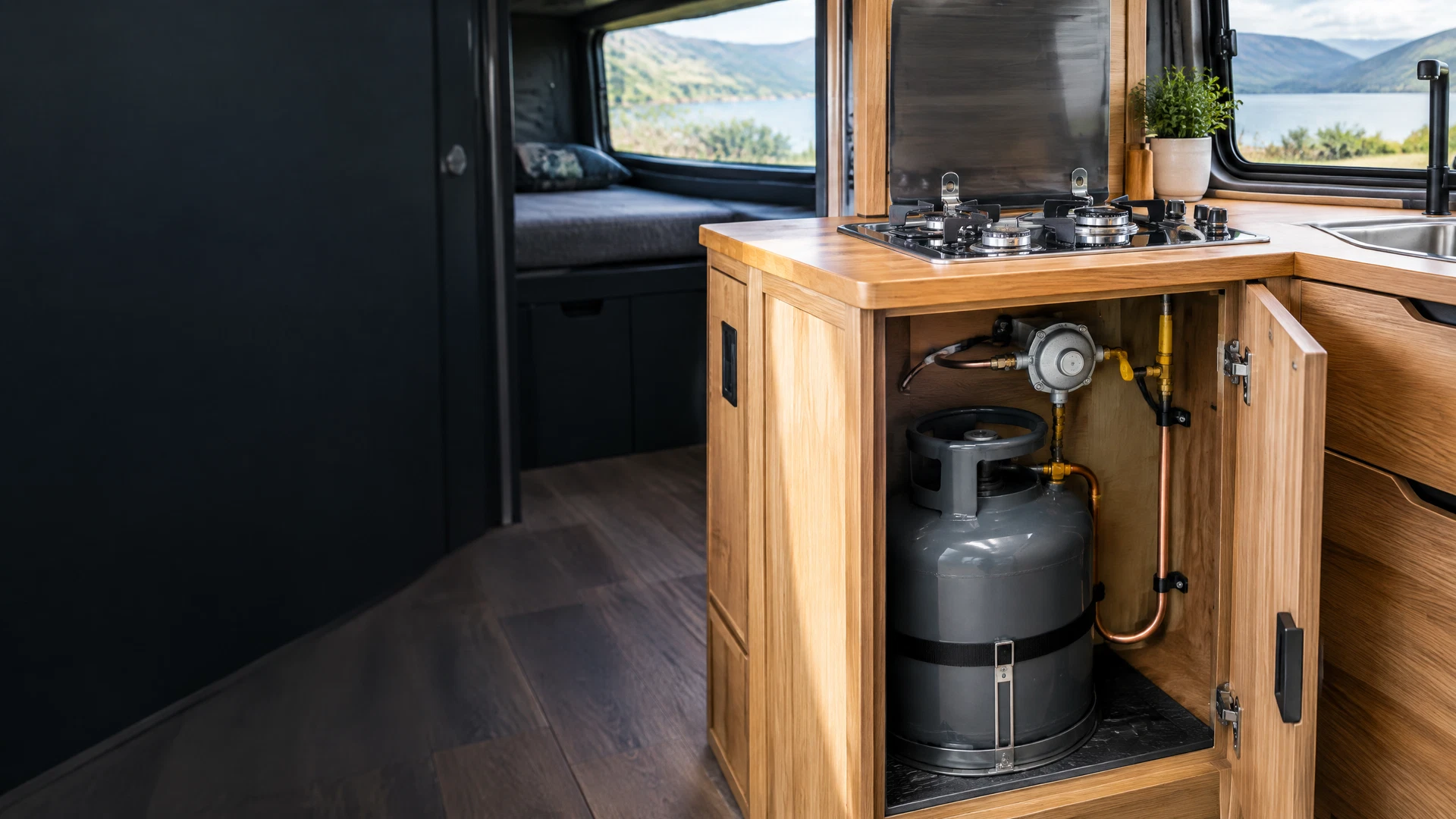
An LPG cooking system can be a useful part of a campervan conversion, giving you a dependable hob and, where appropriate, fuel for other appliances. Gas is also a system that must be designed and installed with care. The cylinder, locker, regulator, pipework, appliances and ventilation all need to work together, and access for future inspection should be considered from the start.
This guide is general information rather than a substitute for installation and inspection by a suitably qualified person. Gas work in a vehicle should never be treated as a casual DIY project.
Start with the Gas Locker
The cylinder should be housed in a properly sealed gas locker that is isolated from the living space and vented safely to the outside. LPG is heavier than air, so a low-level leak path is important. The locker should be secure, protected from damage and accessible enough for the cylinder, regulator and connections to be checked.
Do not store loose items, electrical equipment or unrelated containers in the gas locker. Keep the installation tidy and follow the requirements for the cylinder type and appliance system being used.
Plan the Pipework
Pipework should be routed securely, protected from sharp edges and kept away from heat and areas where luggage can crush it. Connections need to be suitable for the system and accessible for inspection. Flexible hoses have specific service-life and routing requirements; they should not be hidden behind permanently fixed panels where their condition cannot be checked.
The regulator must match the appliances and gas type. Using mismatched components or combining parts without checking their specifications can create an unsafe pressure or poor combustion. Every appliance should be installed according to its manufacturer instructions.
Ventilation and Carbon Monoxide
A gas appliance consumes oxygen and produces combustion gases. Adequate fixed ventilation is therefore essential, even when the van feels draughty. Never block a ventilation grille to keep the interior warmer. A carbon-monoxide alarm suitable for the vehicle environment provides an important extra layer of protection, but it does not replace correct installation or regular checks.
If an appliance has a yellow flame, unusual soot, a strange smell, repeated ignition problems or a damaged flue, stop using it and arrange an inspection. LPG itself has an added odour, but you should never rely on smell alone to detect a leak.
Before and During Trips
Turn the gas supply off when the system is not in use and follow the appliance instructions when lighting it. Check the cylinder and connections visually, keep the locker dry and do not use a naked flame to search for a leak. A suitable leak-detection method and professional inspection are safer options.
New Forest Custom Campers plans campervan kitchens alongside ventilation, electrics, storage and the rest of the conversion. If you are designing a new interior or have concerns about an existing gas installation, call AVS Bransgore on 01425 200826 for practical guidance and a referral to the appropriate qualified specialist.
Found this helpful?
Share it with a friend who might find it useful.